The Art and Science of Merchandising, Part 1: Structural Integrity and Iterative Optimization

Co-Founder & CEO
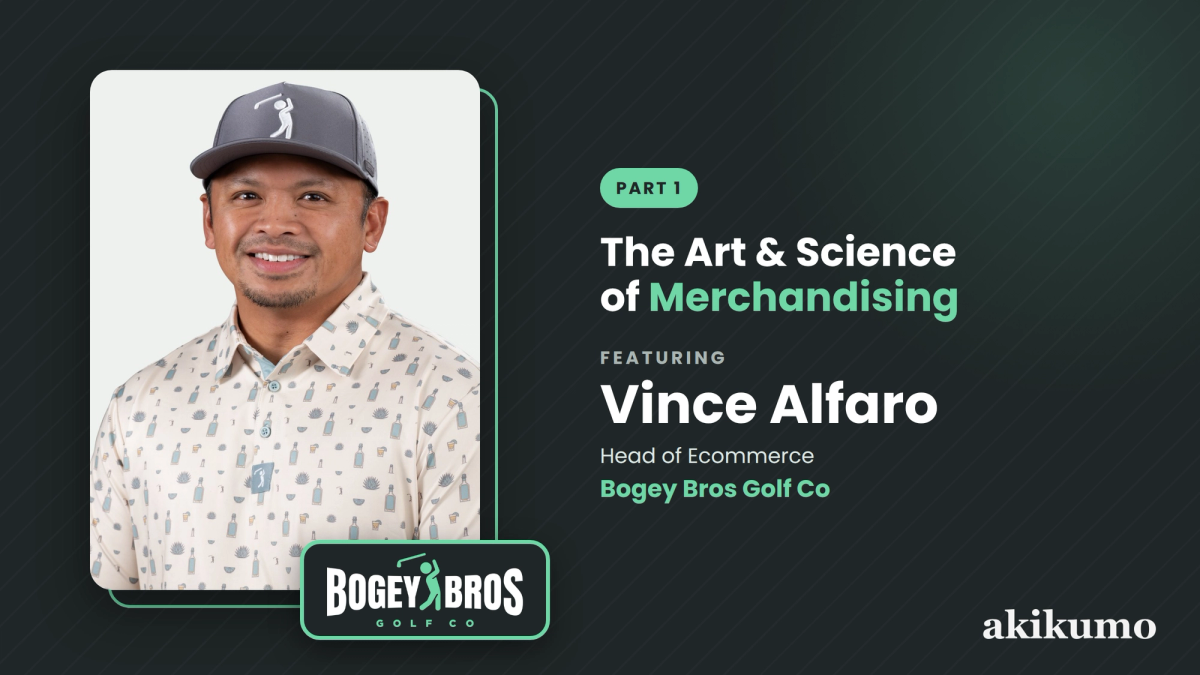
In this series, we sit down with e-commerce leaders to uncover the hidden complexities of collection management, data-driven decision-making, and what it takes to build a merchandising strategy that actually converts. Today, we are talking with Vince Alfaro of Bogey Bros.
Key Takeaways for E-Commerce Merchandisers
- Navigation is Your Floor Plan: Treat your site architecture like a physical department store. Clear, simple categorization beats "cute" naming conventions every time.
- Prioritize Structural Integrity: Before you merchandise a collection, ensure the page has solid UX, SEO, image compliance (alt tags), and on-brand aesthetics.
- Iterative Optimization: Move away from gut-feeling merchandising. Sort your collections by revenue and use A/B testing to prove what works.
- Balance Art and Science: Hard data should guide you, but brand intuition allows you to manually pin hero or themed products based on upcoming holidays or brand missions.
If an apparel brand is trying to optimize their site, what is the very first step they should take before they even look at their inventory?
Vince Alfaro: It all starts with site architecture. Think of it like a physical department store. If you walk into a Macy’s, there’s a strategic layout—men’s, sleepwear, luggage, shoes. It was conceived by a strategist. In e-commerce, your navigation bar is your floor layout. You have to be incredibly strategic with your naming conventions and categorization. Brands often try to be too cute or wordy with their navigation, but sometimes what wins is just clear, simple labels like men's, women's, shoes, or toys. You need to figure out that master flow before you can even begin to merchandise individual collections.
Once that foundation is set, what are the “best practices” for actually merchandising a collection page?
Vince Alfaro: Collection page TLC is essential. That means ensuring structural integrity before you do anything else:
- UX
- SEO
- Compliance (like image alt tags)
- On-brand aesthetics
But beyond that, true best practice is iterative optimization. Before we started using tools like Akikumo, we were merchandising based on gut feeling. Now, we sort by revenue and run A/B tests on those collections to prove the data.
You mentioned the balance between hard data and brand instinct. How do you navigate that tension?
Vince Alfaro: There is a blend between art and science. You can't always go by the hard data. If you have a brand mission and intangibles that you value, you have to merchandise a collection page in a way that serves the brand. For example, if you have two hero products, you might make a leadership decision to keep them pinned prominently on a collection page regardless of their sales velocity. We will often sort a major collection page by revenue, but if we know a specific holiday like Memorial Day or Father's Day is coming up, we will manually pin a themed product to the top, regardless of its data proof. That requires discernment.
Stop relying solely on gut feeling. See how Akikumo gives you the revenue data and sorting automation you need to iterate, optimize, and build a site architecture that converts. [Explore the Akikumo Shopify App / Book a Demo]