The Art and Science of Merchandising, Part 2: Segmentation and Merch Planning

Co-Founder & CEO
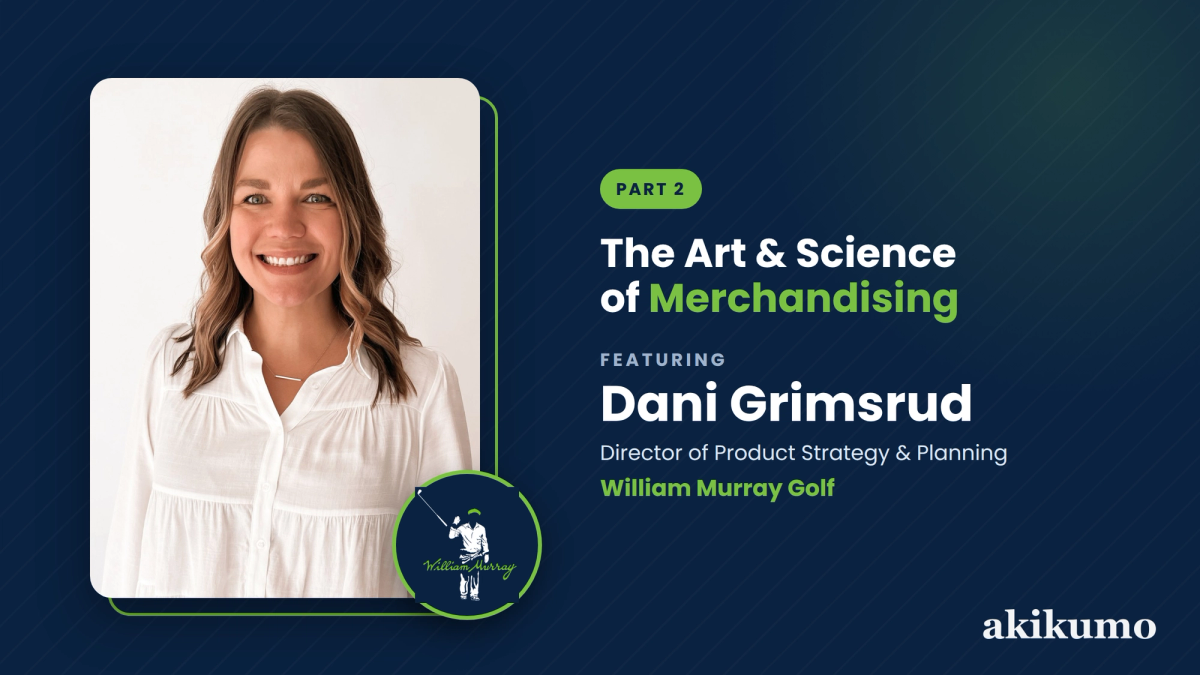
In this series, we sit down with e-commerce leaders to uncover the hidden complexities of collection management, data-driven decision-making, and what it takes to build a merchandising strategy that actually converts. Today, we are talking with Dani Grimsrud of William Murray Golf.
Key Takeaways for E-Commerce Merchandisers
- Prevent Choice Paralysis: Avoid dumping products onto endless scrolling pages. Segment your catalog intuitively (by gender, category, etc.) to help browsing customers find what they need without feeling overwhelmed.
- Data-Driven Design Targets: Merchandising planning starts before the design phase. Use historical revenue and product data to tell your designers exactly how many styles they need to create to hit seasonal targets.
- Leverage Wholesale Signals: If you have a wholesale channel, use their pre-book data as an early indicator of e-commerce demand. Overselling an item in wholesale gives you months of lead time to restock before the online launch.
When building out a site, how should brands think about segmenting their products?
Dani Grimsrud: You have to figure out how you want to segment your products—whether that's by gender or by category like tops and bottoms. It’s important because you have two types of customers: those who know exactly what they want, and those who are just browsing to see what you have. If you present a customer with one endless page of everything, they get choice paralysis and are less apt to buy. It's similar to how Trader Joe's is successful because they don't overwhelm you with 15 different options for one item. You have to put yourself in the customer's shoes and design a flow that helps them get to where they want to go without overwhelming them.
How does data play into planning for the next season?
Dani Grimsrud: Setting your design team up for success is a massive part of merch planning. You should be able to look at historical data—how many polos did we release last May, and how much revenue did they drive? If a product didn’t sell well and we are discontinuing it, we have to know exactly how we are going to replace that lost revenue. You need those numbers before seasonal kickoff so your designers know exactly how many styles they need to create and what revenue targets they need to hit to stay on track.
Are there any unconventional signals or metrics you look at to predict what will sell well online?
Dani Grimsrud: If your wholesale segment pre-books products, do not discount it. Because wholesale accounts pre-book, that channel is selling inventory to buyers long before it ever hits our e-commerce website. It is the absolute earliest way to read and react. Our buyers are interacting with the end customer every day, so if we are overselling our allocation of a specific polo in our wholesale channel, that tells me we need to order more inventory before it launches online. It gives us months of lead time to restock instead of waiting until it launches on e-commerce and scrambling to restock it six months later.
Planning your inventory shouldn't feel like a guessing game. If you want to give your merchandising and design teams the historical data and catalog visibility they need to read and react faster next season, see how Akikumo can streamline your planning process.
Discover how Akikumo gives merchandising teams the granular product intelligence they need to read and react faster, prevent stockouts, and build a planning process that actually scales. [Book a Demo / Explore the Akikumo Shopify App]