
A Team of One: Managing a Growing Shopify Catalog at William Murray Golf

High-priority collection management
SKUs managed
4,600
Collections
55
New products per season
50–75
"It helps take some time off my plate so I can spend it more on other aspects of the company that may need my help which is helpful, especially being a small team."
Skylar, Sales Operations & Merchandising, William Murray Golf
Introduction

When actor and comedian Bill Murray and his brothers debuted William Murray Golf in 2016, the brand grew quickly. A decade later, with a growing catalog and a leaner team, the priority became operational efficiency, converting more sales without adding more resources.
Skylar joined WMG as a Wholesale Coordinator in 2022, as she outperformed her role, leadership expanded her responsibilities to include sales operations and merchandising. That meant launching 50 to 75 new products each season, determining which products should be visible based on inventory levels and seasonality, and keeping seasonal collections and featured email products updated on a daily or weekly basis. When time allowed, she also performed routine audits of product detail pages to catch and correct inaccurate tagging, titles, and typos. She also became the informal connection between sales, marketing, product development, customer service, and the operations department communicating site changes and providing daily financial pacing to ensure all departments were working from the same revenue numbers.
Skylar knew her value and wanted to grow sales in other areas, wholesale, golf shops/country clubs, boutiques, and distributors. But the manual nature of managing thousands of products across the site left little room for anything else.
Challenge
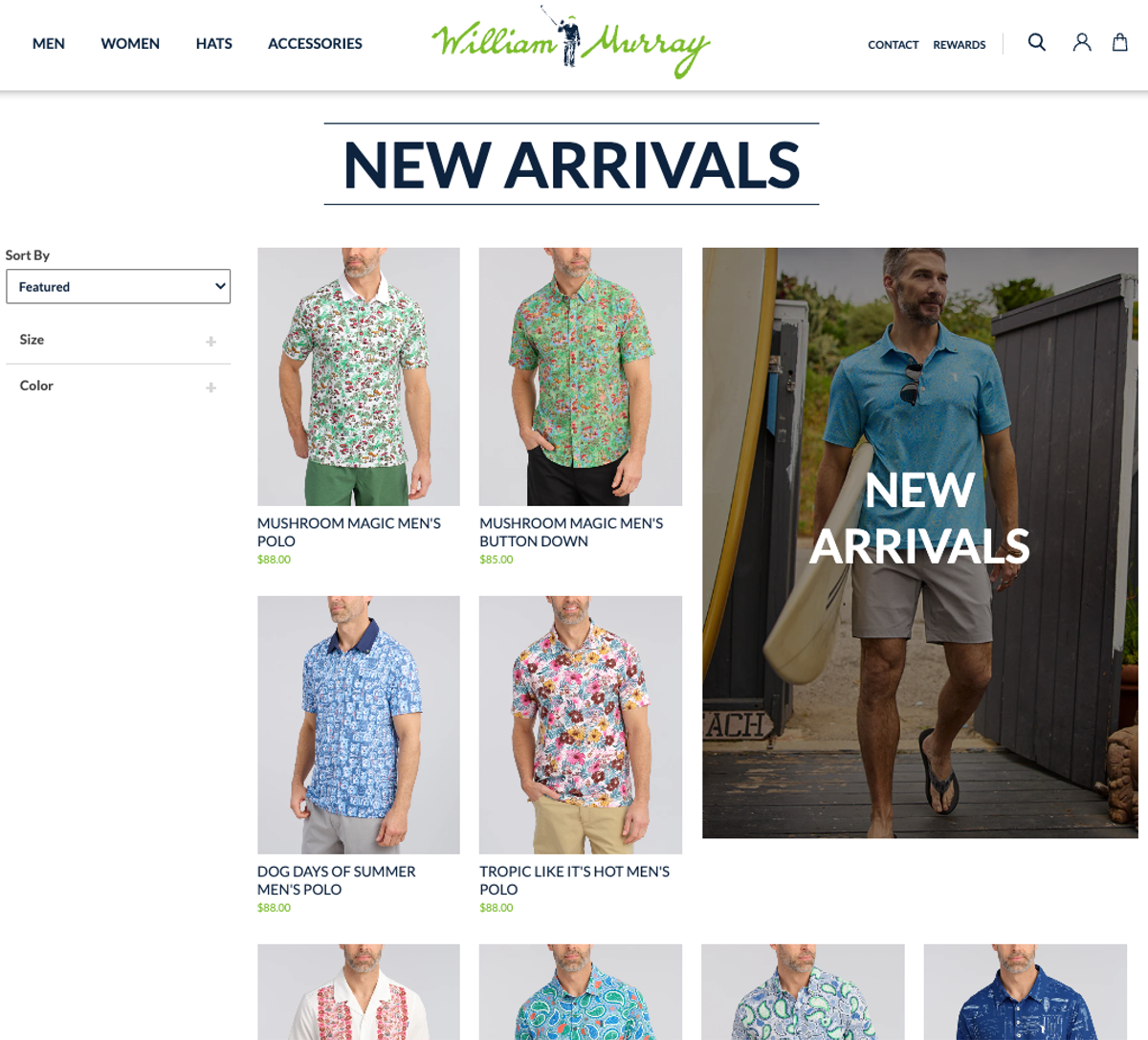
The goal of successfully merchandising a site is simple: get the highest, most profitable inventory in front of customers first, push the low-stock, low-margin products toward the bottom, and keep the page looking fresh and intentional rather than a scattered mix of whatever was last updated. In real life, keeping things that way meant Skylar was checking in on collections on Friday nights or early Saturday mornings just to make sure the site looked right before the weekend.
For Skylar, that goal ran straight into the reality of managing an average of 4,600 SKUs across 55 collections, with 50 to 75 new products added each season. Every new product published required extra attention to boost it inside the New Arrivals collection and give it the time and visibility it needed to attract the customers interest. High-priority collections tied to active marketing campaigns got the most attention, even though she could realistically merchandise the first page of results every few days. Lower-priority ones, men’s bottoms, button-downs, a handful of others, went weeks between check-ins. There just wasn’t time, and other things took priority.
When she did get to those collections, the process was entirely manual. Shopify opened on one screen, the WMG website on the other, she’d rearrange products by hand and refresh the page to see how things actually looked to a customer. And before she could trust what she was looking at, she had to triple verify the inventory, checking shopify first, then ShipHero if something looked off, then Netsuite on top of that just in case the wholesale department reserved inventory for their customers. New products, New Arrivals, Men’s and Women’s Polos, Cart Barn sale page, and other high visibility collections got the most attention. Previous-season collections and lower-traffic pages got no attention at all.
The Solution
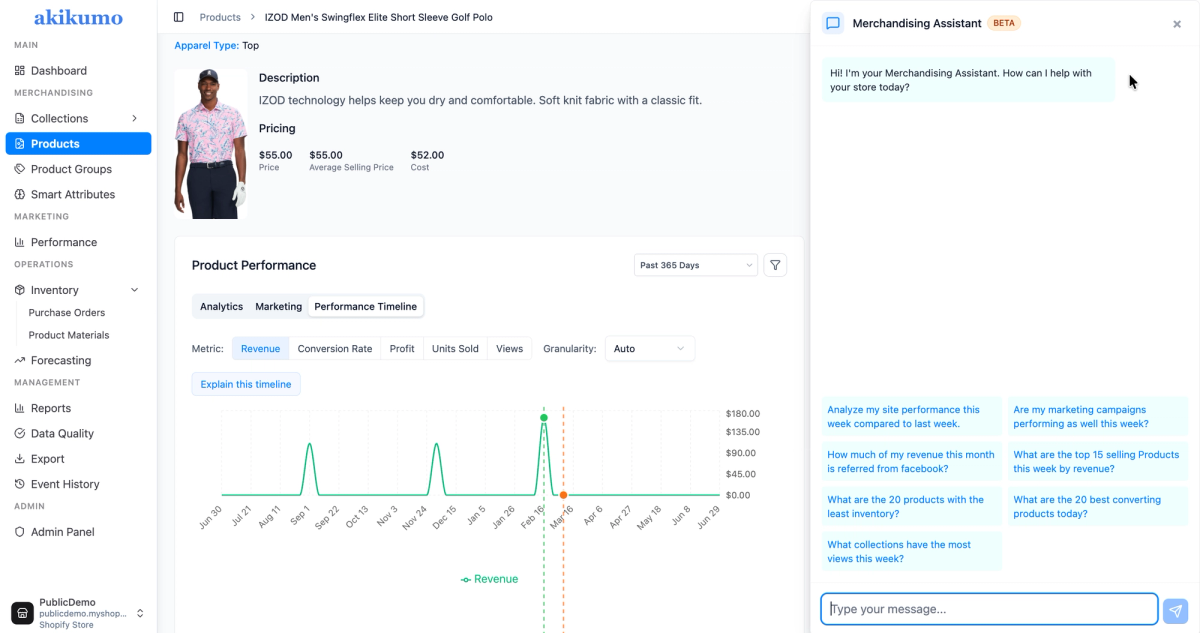
With Akikumo, adding new products and managing high priority collections no longer requires constant manual attention.
When new products are published to a collection, they automatically boost to the top of the collection for a set number of days. The page sorts on a 12 or 24-hour refresh cycle, everything stays in order, and Skylar doesn’t have to check in over the weekend to make sure everything is okay. The Cart Barn sale page runs on a 12-hour cycle so returning customers always see a fresh view of products without her manually moving products around and sold out products get buried automatically as inventory depletes.
Akikumo also gives Skylar faster visibility into out-of-stock products, surfacing potential missed revenue opportunities in real-time, showing her how many days of supply remain before a product sells out completely, and burying low-stock items towards the middle and bottom of the page so they stop taking up prime positions at the top of the page.
The site audits that used to be a nice-to-do-if-there's-time task are now done in seconds. What previously meant clicking through products one by one at the variant level, checking tags, titles, categories, color names, and typos, across thousands of SKUs, is handled by Akikumo's Data Quality Report. It scans the catalog, surfaces naming inconsistencies all at once, and distinguishes between colors that are genuinely different, inconsistently spelled, and/or capitalized. What used to get pushed to the back burner when something more pressing came up is now systematic, and Skylar has time back to help her manager Dani fulfill wholesale orders and grow that side of the business.
For a small e-commerce team managing a catalog this size, it's a big deal! Every hour recovered from reactive checking is an hour that can go toward the work that actually grows the business.
| Before Akikumo | After Akikumo | |
|---|---|---|
| Keep collections current | Manual checks, Friday nights and Saturday mornings | Automated, hands-off |
| Sorting products | Two screens, rearranged by hand | Rules run in the background |
| Confirming inventory | Triple-verified across Shopify, ShipHero, and NetSuite | One source of truth |
| Auditing product data | Hours-long manual review | Seconds, automated |